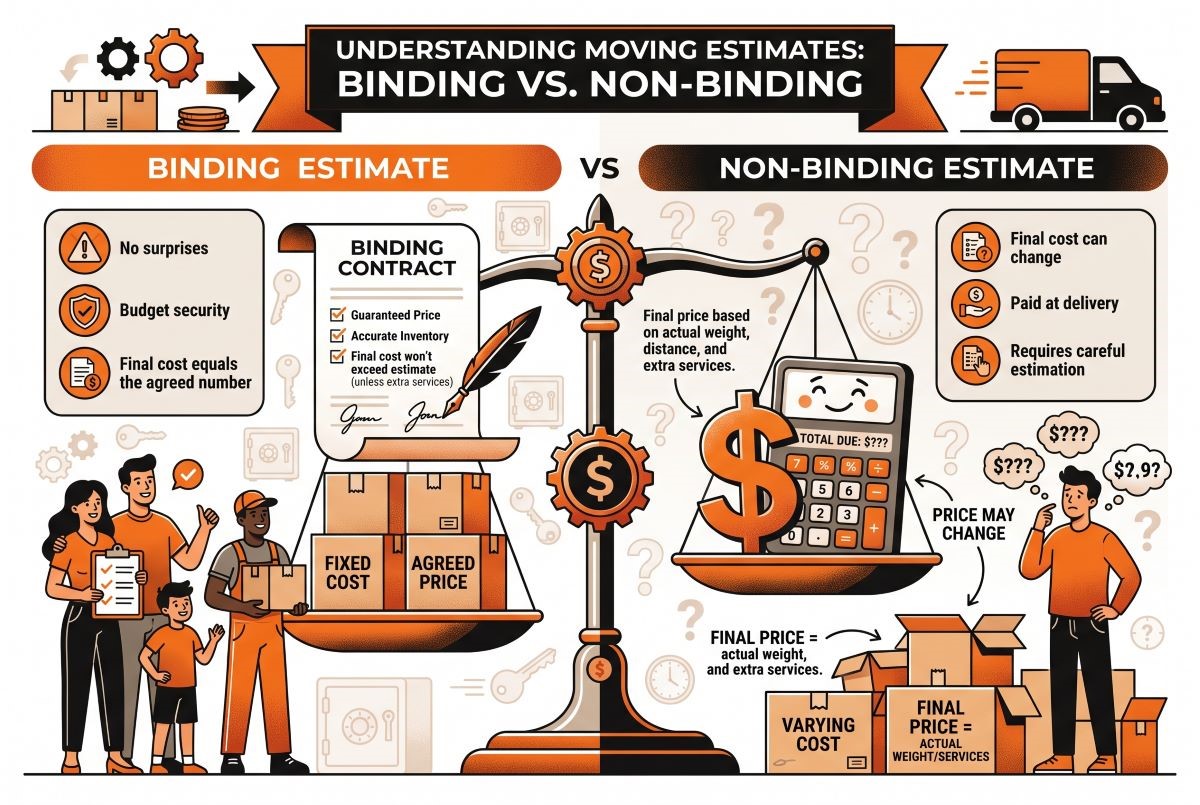
Choosing the right moving estimate is one of the most critical steps to ensuring a stress-free relocation. The contract style you choose directly dictates how your final bill is computed, giving you control over your financial protection on moving day.
Relocation specialists typically issue two primary contract formats—binding and non-binding—alongside a highly protective third option called binding-not-to-exceed. Here is how each agreement works so you can pick the best fit for your moving needs.
1. How Binding Estimates Work
Signing a binding estimate creates a firm agreement that guarantees your final price upfront. The contractor determines this rate by evaluating your itemized inventory alongside any required specialized services.
Fixed Rate Security: Your bottom-line charge stays identical to the quoted figure, regardless of whether your shipment scales heavier or lighter than projected.
Inventory Compliance: Because pricing depends on the initial inventory list, introducing additional boxes, extra furniture, or last-minute packing requests on moving day permits the crew to reissue a new contract or cancel the binding agreement.
Payment Requirement: Settlement of the agreed sum must take place before the movers begin unloading your goods at your destination.
Main Advantage: Outstanding budget protection against unexpected weight fees.
Main Disadvantage: No adjustment to lower your bill if your cargo turns out significantly lighter.
2. How Non-Binding Estimates Work
A non-binding estimate operates as an approximate project evaluation rather than a fixed price tag. Your actual financial obligation is computed only after your goods are weighed on a certified scale, combined with any applicable hourly labor or equipment fees.
Dynamic Pricing: Your total bill moves up or down based on your actual cargo weight. Shipping less weight cuts your expenses, while shipping extra weight increases your overall total.
The 110% Delivery Rule: Federal regulations for interstate relocations prohibit movers from demanding more than 110% of the initial non-binding estimate to deliver your possessions. Any remaining balance exceeding that 110% cap must be billed separately, giving you 30 days to pay.
Budget Flexibility: Variable overall costs make precise financial planning harder to manage.
Main Advantage: Direct financial savings if you downsize or clear out clutter before loading day.
Main Disadvantage: Increased risk of cost overruns if the initial weight was underestimated.
3. The Hybrid Strategy: Binding Not-to-Exceed Quotes
When gathering quotes, asking for a Binding Not-to-Exceed estimate (often labeled a "Guaranteed Cap" quote) delivers the best overall value for homeowners.
This option combines the top features of both traditional estimates:
If your shipment scales heavier than expected, your total cost remains capped at the maximum rate established in your contract.
If your shipment scales lighter than expected, your final invoice automatically drops to reflect the actual lower weight.
If you would like to get a written estimate for your upcoming long-distance move, contact Covan World-Wide Moving today. Fill out our online quote form or give us a call today.
Subscribe to Covan World-Wide Moving, Inc.'s Blog